5 Easy-to-Grow Houseplants for a Greener, More Relaxing Home
When the outdoor gardening season winds down and we’re spending more time indoors, having a few houseplants around can make our homes feel a little more welcoming.
But just like outdoor gardening, indoor plants shouldn’t become another long list of chores.
One of the most important lessons I’ve learned over the years is to choose the right plant for the right spot. And that applies just as much to houseplants as it does to your outdoor garden.
When I lived in the woods, we simply didn’t get enough natural light to grow many indoor plants successfully. It didn’t matter how carefully I watered or tended them. Some plants just weren’t going to be happy in that house.
And that’s something many gardeners overlook.
Before bringing home a beautiful new houseplant, take a good look at the light your home actually provides. Choosing plants that suit your conditions is one of the easiest ways to avoid frustration and unnecessary work.
First, Understand the Light in Your Home
Houseplant labels often say things like “bright indirect light” or “moderate light.” But what does that really mean? Here are some simple guidelines.
Direct Sunlight
The sun’s rays shine directly onto the plant’s leaves.
- South-facing windows generally provide the strongest and longest-lasting sunlight, especially during winter.
- West-facing windows receive stronger afternoon sunlight.
- Plants like aloe vera appreciate sunny locations.
Sun-loving indoor plants may need approximately 4–6 hours of direct sunlight each day to do their best. Treat this as a practical target rather than an exact rule; light intensity varies by window, season, and surroundings.
Bright Indirect Light
Think of a bright room where there’s plenty of natural daylight, but the plant isn’t sitting in the path of intense afternoon sunshine.
- East-facing windows are often ideal because they receive gentle morning sun and indirect light afterward.
- South-facing windows can work if the plant is positioned away from strong direct rays or the light is softened by a sheer curtain.
- West-facing windows can work, but you may need to protect plants from hot afternoon sun.
Most plants that prefer bright indirect light do best with a well-lit position throughout much of the day, not just an hour or two of light.
Medium Indirect Light
These locations receive useful natural daylight but aren’t as brightly lit.
- An unobstructed north-facing window may provide suitable light for some plants.
- An east- or west-facing window with filtered light can also work.
- A location a short distance from a brighter window may provide medium light.
Plants that tolerate medium light often grow more slowly than they would in brighter conditions.
Low Light
Low light doesn’t mean no light! A north-facing window, a window shaded by trees, or a spot farther from a bright window might qualify.
Some houseplants can tolerate these conditions, but growth is usually slower. Flowering plants may not bloom at all.
Don’t Forget What’s Outside Your Windows
Window direction is only part of the story. A south-facing window shaded by large trees or a deep porch overhang may not provide nearly as much light as you’d expect. And light drops off quickly as you move away from a window.
My advice: Before buying a houseplant, watch the spot where you’d like to put it over the course of a day. Notice when the sun actually reaches the window, whether the light is direct or filtered, and how trees or buildings affect it.
You don’t need to measure every ray of sunshine. Just get familiar with what your home offers.

Now, let’s look at five houseplants and where they’ll be happiest.
1. Spider Plant (Chlorophytum comosum)

Best location: An east-facing window or another spot with medium to bright indirect light.
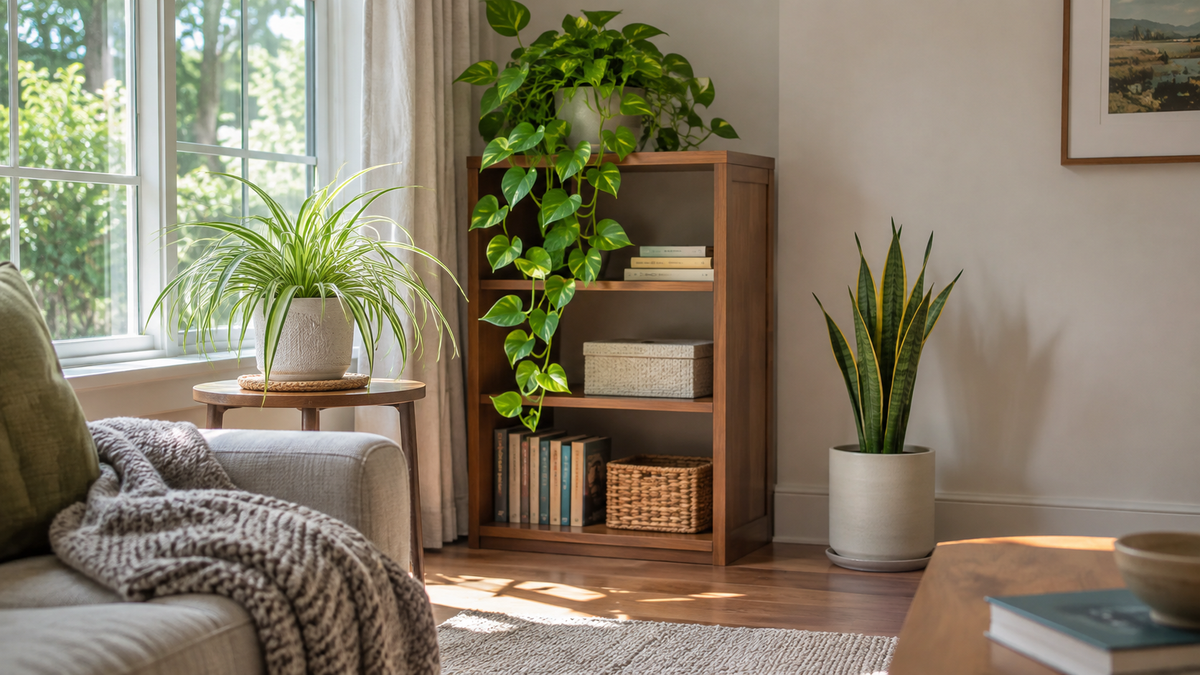
Spider plants have long, arching leaves that look especially attractive in hanging baskets or on shelves.
They’re also fun to grow because they produce baby plants, called spiderettes, on long stems. Once those little plants develop roots, you can start new plants to keep or share with friends.
Light requirements:
- East-facing windows are an excellent choice.
- Bright north-facing windows may also work.
- Near a south- or west-facing window, keep the plant out of harsh afternoon sunlight.
- Aim for good natural daylight through much of the day. A little gentle morning sun is fine.
Watering: Allow the soil to dry slightly between thorough waterings.
Why it’s a relaxed choice: Spider plants are forgiving, easy to propagate, and don’t require complicated care.
2. Peace Lily (Spathiphyllum spp.)

Best location: An east-facing window or a room with medium to bright indirect light.
Peace lilies have beautiful, glossy green leaves and elegant white spathes that surround their tiny flowers.
They can tolerate lower-light conditions, but here’s something important to remember: tolerating low light isn’t the same as thriving in it. A peace lily may survive in a dimmer room but produce few, if any, flowers.
Light requirements:
- East-facing windows provide a good balance of gentle morning sun and indirect daylight.
- Bright north-facing windows can work, particularly for foliage rather than flowering.
- South- and west-facing windows are suitable if you protect the plant from strong direct sunlight.
- For the best chance of flowering, provide bright indirect light for much of the daylight period.
Watering: Keep the soil lightly moist, letting the surface dry slightly between waterings. Don’t allow the pot to remain soggy.
Why it’s a relaxed choice: A peace lily provides attractive greenery even when it’s not blooming, although it needs a little more watering attention than some other plants on our list.
3. Pothos (Epipremnum aureum)

Best location: Near an east-facing window or in medium indirect light.
Pothos is one of my favorite recommendations for people who want greenery without too much fuss. Its heart-shaped leaves grow along trailing vines that look lovely cascading from a shelf or hanging container.
Pothos tolerates a variety of indoor conditions, including lower light. However, plants grown in dim locations generally grow more slowly, and variegated varieties may lose some of their distinctive coloring.
Light requirements:
- East-facing windows are a very good choice.
- Bright north-facing windows can work.
- South- or west-facing windows provide good light if the plant is protected from intense direct sun.
- Provide several hours of good indirect daylight, preferably with useful natural light throughout much of the day.
Watering: Allow the upper portion of the potting mix to dry before watering again.
Why it’s a relaxed choice: Pothos tolerates an occasional missed watering and doesn’t need much pruning unless you want to control the length of its vines.
4. Snake Plant (Dracaena trifasciata, formerly Sansevieria trifasciata)

Best location: A bright north- or east-facing window, although it tolerates lower light.
If you tend to forget about watering your houseplants, a snake plant might be the perfect choice. Its tall, upright leaves add an interesting architectural touch to a room, and it doesn’t demand frequent attention.
Snake plants are often recommended for low-light spaces. While they can tolerate those conditions, they’ll generally grow better with brighter light.
Light requirements:
- East-facing windows are excellent.
- North-facing windows can work if they receive adequate natural daylight.
- South- and west-facing windows are suitable with appropriate adjustment to stronger sunlight.
- No particular number of hours of direct sunshine is required, but brighter indirect light generally encourages healthier growth.
Watering: Allow the soil to dry thoroughly between waterings. Snake plants are far more likely to suffer from overwatering than from an occasional missed watering.
Why it’s a relaxed choice: A sturdy, slow-growing plant that doesn’t need much fussing over. Sometimes doing less really is better!
5. Aloe Vera (Aloe vera)

Best location: A sunny south-facing window.
Aloe vera is a succulent with thick, fleshy leaves that store water. It’s a good choice if you prefer plants that don’t need frequent watering. But unlike our other four houseplants, aloe really does need a bright location.
If your home doesn’t get much direct sunlight, this may not be the best plant for you unless you’re willing to provide supplemental lighting.
Light requirements:
- An unobstructed south-facing window is usually the best choice.
- A sunny west-facing window may also work.
- Aim for approximately 4–6 hours of direct indoor sunshine where possible, along with bright daylight.
- If moving aloe into stronger sun, make the change gradually to avoid scorching its leaves.
Watering: Use a well-draining succulent potting mix. Allow the soil to dry between waterings, and reduce watering during the winter months.
Why it’s a relaxed choice: With enough light and good drainage, aloe needs relatively little attention.
Which Plant Fits Your Home?
Instead of choosing a plant first and then searching for somewhere to put it, try the opposite approach. Look at your windows and the available light. Then choose a plant that suits those conditions.
| Your available light | Plants to consider |
|---|---|
| Bright south-facing window | Aloe vera; other plants with protection from intense sun |
| East-facing window | Spider plant, peace lily, pothos, snake plant |
| West-facing window | Most of these plants with appropriate positioning; aloe in a sunny spot |
| Bright north-facing window | Pothos, snake plant, peace lily, possibly spider plant |
| Heavily shaded windows | Consider supplemental lighting or other arrangements |
Remember that these are starting points. A shaded east-facing window may provide less light than an unobstructed north-facing window.
What If Your Home Just Doesn’t Get Enough Light?
I’ve been there! When we lived in the woods, no amount of wishful thinking was going to make our shaded rooms sunny.
If your home has very limited natural light, you have a few choices. You can select plants that tolerate lower light, concentrate your plants near your brightest windows, or use a small grow light where natural light is insufficient.
And you don’t need to keep moving plants from room to room chasing sunlight. It’s much easier to find a suitable permanent location and choose your plants accordingly.
One more tip: If your plants are producing long, weak stems, losing variegation, or leaning dramatically toward the window, they may be telling you they need more light.
A Quick Note for Pet Owners
If you have curious cats or dogs, plant safety matters too. Of the five plants in this article, the spider plant is the only one classified as non-toxic to cats and dogs by the ASPCA. Peace lilies, pothos, snake plants, and aloe vera can cause problems if eaten. Always check plant safety before bringing a new houseplant home.
What About Houseplants Cleaning the Air?
You may have heard that some houseplants remove harmful chemicals from indoor air. This idea grew out of laboratory research showing that certain plants can absorb pollutants under controlled conditions.
However, later studies found that a few potted plants won’t make a meaningful difference to the air quality in a typical home. Ventilation and reducing sources of indoor pollution are much more effective.
That’s no reason to give up houseplants! They add natural beauty, color, and texture to our homes and give us something green to enjoy when outdoor gardening is on hold.
My Advice? Start With the Spot, Not the Plant.
One of the easiest ways to make gardening more enjoyable is to stop fighting the conditions you have.
Before you bring another houseplant home, identify a good spot for it. Figure out how much natural light that spot actually receives and choose something that will be happy there.
And remember, as the days get shorter, most houseplants grow more slowly and need less water. Always check the soil before watering.
You don’t need a house full of plants or a complicated care routine. A few healthy, well-placed houseplants are enough to make your home feel a little greener and more inviting.
The right plant in the right spot means less work, less frustration, and more enjoyment.
Do you have a favorite houseplant that thrives in your home? Or a challenging spot where nothing seems to grow? I’d love to hear about it!
Happy Gardening and Relaxing!

The Relaxed Gardener